



Among young people, mental health difficulties are increasingly common: chronic anxiety, depression, social isolation and trouble managing emotions. Left unaddressed during these formative years, they become a strong risk factor for chronic illness later in life. Schools and cities offer few non-pharmacological ways to support this kind of wellbeing, and socio-economic barriers keep culture and the arts out of reach for many.
Choral singing offers a way in: it works on breathing and emotional regulation, lowers stress hormones and encourages the release of hormones linked to calm and connection, and it builds a genuine sense of belonging among a group that rehearses and performs together over time. Reaching students within their everyday school routine, rather than asking them to seek help elsewhere, removes one more barrier to access.
The project
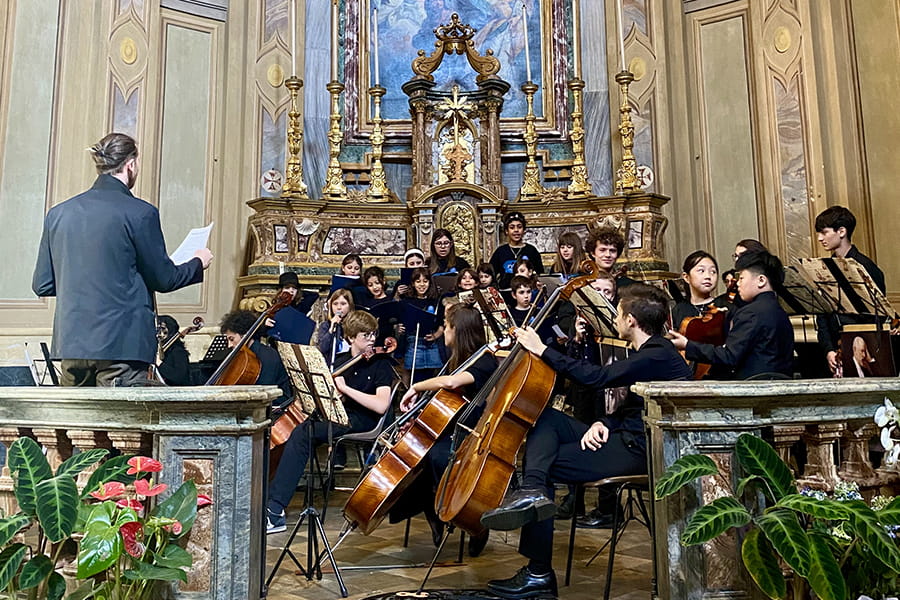
Santa Pelagia Singers Lab brings a weekly choral programme into ten classes across the Torino metropolitan area, structured as ten one-hour sessions led by choir directors and professionals experienced in working with students with special educational needs and disabilities. Alongside singing, the sessions include diaphragmatic breathing and guided coordination exercises that help students regulate stress, ease anxiety and listen to one another more closely, with wellbeing and classroom climate checked before and after the programme.
The programme is free for every student who takes part, with priority given to those facing socio-economic vulnerability, physical or cognitive disabilities, or special educational needs. It closes with two public concerts within the 'I Concerti di Santa Pelagia' season, where the choir performs for an audience beyond the school, turning a school activity into a shared moment of wellbeing for the wider community.
Who the project is for
The project's direct beneficiaries are around 300 students across ten classes, who take part in the weekly sessions over the course of the programme. Priority is given to those facing socio-economic vulnerability, physical or cognitive disabilities, or special educational needs, so that access depends on need rather than circumstance.
Its impact reaches further: around 500 family members notice calmer, more balanced relationships at home, teachers and schools see a more collaborative classroom climate with less conflict, and the wider public, over 500 people at the two closing concerts, takes part in a shared moment of community wellbeing built around the choir's performance.
Project name: Santa Pelagia Singers Lab
Proposing organisation: Fondazione OMI Ente Filantropico ETS
Area of intervention: Health & Welfare
Country: Italy